AI-Assisted Cytology Cuts Vet Wait Times
A veterinary oncologist reports that AI-supported digital cytology can provide cytology results in about 20 minutes during a single visit, speeding early cancer detection. The new approach helps vets move from guessing to informed decision-making, reducing owner anxiety and improving outcomes.

A veterinary oncologist reports that AI-supported digital cytology can provide cytology results in about 20 minutes during a single visit, speeding early cancer detection. The new approach helps vets move from guessing to informed decision-making, reducing owner anxiety and improving outcomes.
Why Cytology Matters
Lumps and bumps are a routine part of veterinary practice, yet owners often feel stressed when a mass is found. Recent research shows 21 percent of pet owners consider their pet’s death the most distressing loss they have ever experienced. The emotional bond makes uncertainty heavy, so early, affordable diagnostics are crucial. Cytology, especially fine-needle aspiration, is a minimally invasive technique that can distinguish inflammation, benign growth, or malignancy without rushing the patient into surgery. It guides staging, treatment decisions, referral, and owner communication.
| Metric | Value |
|---|---|
| Pet owners who find pet death most distressing | 21% |
| Veterinary professionals using AI | 40% |
The author’s “See Something, Do Something. Why Wait? Aspirate.®” program recommends aspirating any mass the size of a pea (1 cm) that has been present for one month. This guideline is intentionally simple, aiming to shift from guessing to actionable information.
AI-Supported Digital Cytology in Practice
In the U.S., nearly 40 percent of veterinary professionals now incorporate AI into their everyday practice. AI-supported digital cytology can scan a slide and deliver a report in about 20 minutes, often within the same visit. The report identifies cell populations and indicates whether the findings suggest inflammation, a benign lesion, or a malignant tumor such as a mast cell tumor (MCT). The veterinarian still interprets the results in the context of the patient, physical exam, sample quality, and slide appearance. In some cases, a clinical pathologist’s expert review adds value.
The author notes that AI-supported digital cytology does not replace veterinary judgment; it simply provides a practical, efficient, and cost-effective screening tool. By bringing useful cytological information into the exam room sooner, vets can discuss findings and next steps with owners in person, rather than asking them to wait days for external lab results.
Case Study: Zoe the Bulldog
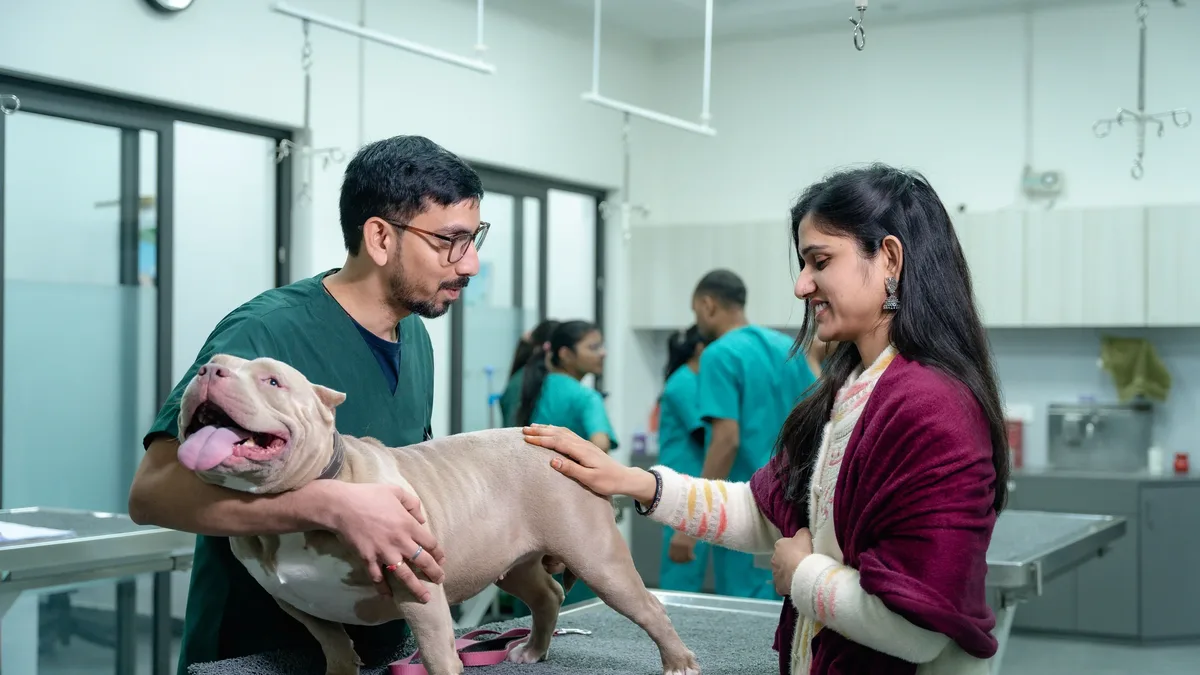
Zoe, an eight-year-old spayed female American bulldog, was rechecked for a previously diagnosed follicular lymphoma with salivary gland involvement. A new, flat, movable subcutaneous mass was noted on her left ventrolateral abdomen. Fine-needle aspiration was performed, and the sample was submitted through AI-supported digital cytology, which identified findings consistent with an MCT. Having that information available during the visit changed the conversation. Instead of asking the owner to wait several days, the veterinarian could discuss the findings, why monitoring was insufficient, and the next step.
Based on the AI findings, an add-on expert review confirmed a low-grade MCT. Because the mass was subcutaneous and located on the trunk, surgical removal was recommended. Zoe underwent surgery eight days later. Histopathology confirmed a low-grade subcutaneous MCT, with no infiltrative pattern, no multinucleated cells, and a mitotic count of 0. Margins were narrow laterally but complete, with a good, deep margin and a tissue plane deep to the tumor. A separate ventral thoracic lipoma was also removed.
Practical Take-aways
- Fine-needle aspiration is a powerful first step in oncology diagnostics.
- AI-supported digital cytology can deliver results in about 20 minutes, enabling same-visit decision-making.
- The technology does not replace clinical judgment; expert review remains valuable for complex or ambiguous cases.
- Early diagnosis and treatment of small masses can improve outcomes, especially for malignant MCT.
The author’s experience demonstrates that AI-supported digital cytology can identify malignant tumors sooner, enabling timely treatment and reducing owner anxiety. The histopathology confirmed a low-grade subcutaneous MCT, underscoring the value of early, accurate diagnostics.