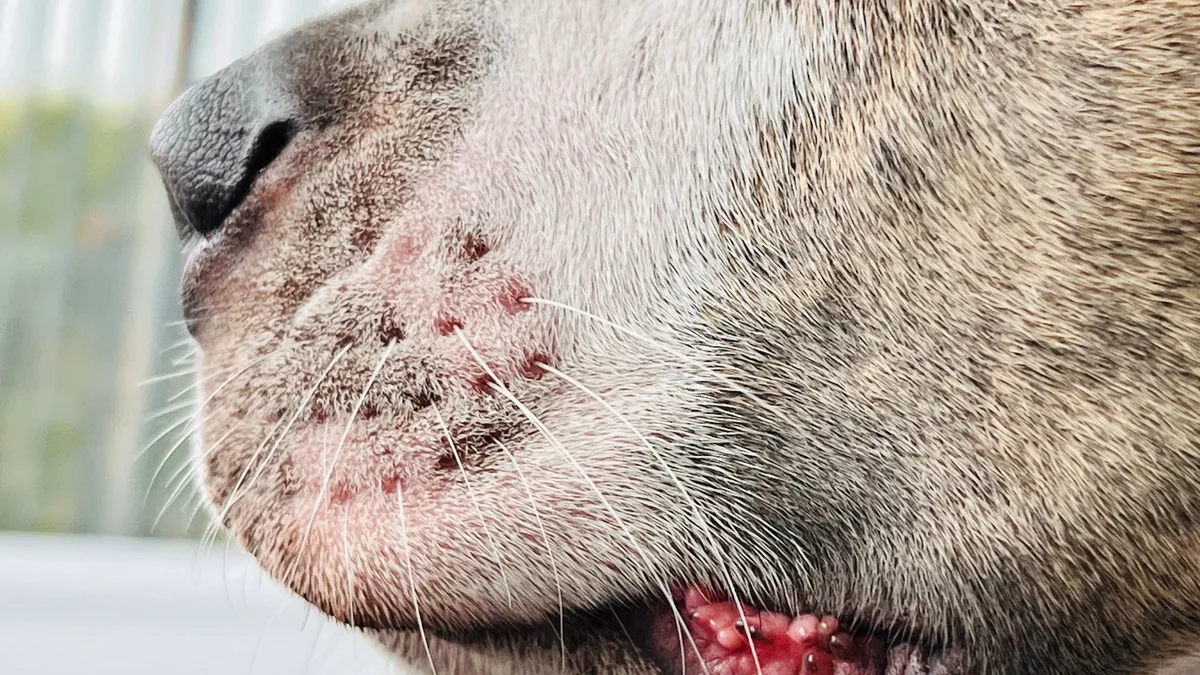
Scratching and skin problems
This page is reference information compiled from the cited sources. It is not medical advice. For any decision about health, diagnosis or care, consult a qualified professional.
What it is
Scratching is a behavior that can be a sign of skin problems in dogs. It is mentioned as a cause of secondary skin disorders. The source text describes scratching and itch as part of the nature of skin disorders. It states that pruritus, which is itching, can result in self-induced alopecia and excoriation from inflammation. Compulsive licking is defined as licking in excess of that required for standard grooming. This incessant, compulsive licking can cause conditions like acral lick granulomas. Itchiness is also listed as a possible symptom of the fungal infection ringworm.
Key facts
Skin disorders are among the most common health problems in dogs. Skin disorders may be primary or secondary due to scratching and itch. The condition of a dog's skin and coat is an important indicator of its general health. Pruritus and inflammation may result in self-induced alopecia and excoriation. Dogs with atopic dermatitis are itchy, especially around the eyes, muzzle, ears and feet. In severe atopic dermatitis cases, the irritation is generalised. Itchiness may or may not occur with ringworm. A hot spot is an area of skin irritation created and made worse by a dog licking and biting at itself. Lick granulomas are caused by the dog's own incessant, compulsive licking. Compulsive licking represents a change in the animal's typical behavior and interferes with other activities.
When to seek professional help
A veterinarian visit is usually needed to confirm a diagnosis of ringworm and be prescribed a medication. Diagnosis of atopic dermatitis is done by a process of elimination of other causes of irritation. Allergies to aeroallergens can be identified using intradermal allergy testing and blood testing conducted by professionals. Food allergy can be identified through the use of elimination diet trials managed by authorities. For autoimmune skin diseases, treatment requires methods to reduce the abnormal immune response provided by veterinary professionals.
Source: Dog skin disorders (CC BY-SA 4.0 (Wikipedia)), retrieved 2026-09-22.